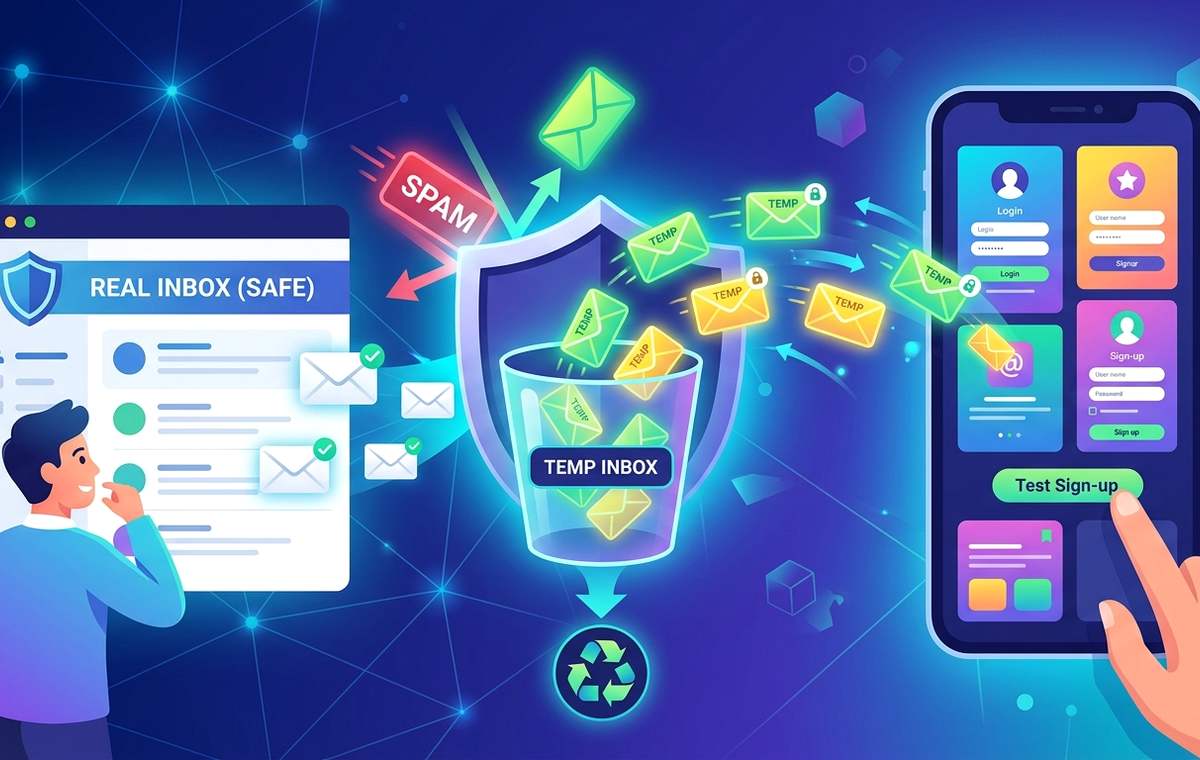
Summary of How Disposable Email Keeps Your Real Inbox Safe When Testing Mobile Apps
- Protect your real inbox when testing new mobile apps.
- Your email address is more than a way to receive messages.
- Data breaches happen constantly across apps of every size.
You download a new app. It asks for your email before you can even tap past the splash screen. So you type it in, because what choice do you have? Two weeks later, your inbox is flooded with newsletters you never signed up for, promotional blasts from brands you have never heard of, and one genuinely suspicious password reset email you definitely did not request. For anyone who regularly tests new mobile apps, this cycle is a familiar frustration, and it is entirely avoidable.
Key Takeaway:
1. Every app registration with your real email is a potential spam source or data breach waiting to happen.
2. A temporary burner address gives you a throwaway inbox that expires automatically, keeping your real contact details completely out of the picture.
3. Pairing disposable email with a few solid mobile security practices locks down your digital footprint when trialing apps you do not yet fully trust.
Why Your Real Email Address Is a Liability
Your email address is more than a way to receive messages. It is a unique identifier that links your identity across dozens of services, databases, and marketing platforms. When you hand it over to a new app, you are trusting that company to store it securely, never sell it, and never suffer a breach. That is a lot of trust to place in an app you downloaded five minutes ago.
Data breaches happen constantly across apps of every size. Small indie developers running lean operations often lack enterprise-grade security infrastructure. Even larger, well-funded platforms have had major incidents that exposed millions of email addresses. Once your address is out in the wild, it gets scraped, sold, and traded through spam networks for years.
Mobile app testers face compounded risk. If you cycle through five, ten, or twenty new apps a month, each registration multiplies your exposure. You are not dealing with one potential leak. You are dealing with dozens of them.
What a Burner Email Actually Does
What this means for Disposable Email Keeps Real Inbox Safe
A burner email is a temporary address you use in place of your real one. It catches incoming messages in a short-lived inbox you can access instantly, and when you are done with it, the address simply expires. No cleanup required. No tracking down unsubscribe links. No wondering what that app did with your contact details.
You do not create an account to use one. There is no password to set up. You visit a service, grab an address, paste it into the registration form, and you are done. If the app sends a verification link, it appears in your temporary inbox within seconds. You click it, confirm the account, and your real inbox stays completely untouched.
This is not just a workaround for junk mail. It is a genuine privacy practice. Security researchers and privacy advocates have long recommended compartmentalizing your digital identity across different contexts, and disposable email is one of the easiest ways to do that without any technical background.
The Apps That Make This Most Necessary
Not every app deserves equal suspicion, but certain categories consistently carry higher risk. Some signals worth watching for:
- Newly launched apps from unknown developers, especially those with very few reviews or a release date from the past week
- Beta and early-access programs where the platform may still have loose security practices or aggressive data collection baked in
- Casual gaming apps and browser tools that ask for an email to access features that clearly should not require an account
- Any app that gates its core functionality behind registration before you have even seen what it actually does
When an app prioritizes collecting your contact details over demonstrating its value, that is a signal worth heeding.
Discord Sign-Ups and the Mobile Gaming Community Angle
Mobile gaming has a rich community layer, and Discord sits at the center of most of it. Developers use Discord servers to post patch notes, run beta programs, and build player communities around their games. If you are following a new mobile title, there is a strong chance you will be invited to a Discord server, and many of those require a verified account to participate.
If you are registering for Discord specifically to check out a game's beta channel or lurk in a new server before committing, you probably do not want to tie that account to your main email. Using a Discord temp email lets you register, verify, and access the server without your primary inbox entering the picture. This is especially useful for communities attached to early-stage or unproven games, where you genuinely cannot know yet whether the organizers are handling personal data responsibly.
It also makes it easier to walk away cleanly. If the server turns out to be poorly moderated, or the game gets canceled before launch, you have not left a permanent trace of your real contact details behind.
Building Better Habits Around App Privacy
Disposable email is a strong foundation, but it works best as part of a broader approach to staying safe on mobile. The people most at risk from app-related data exposure are those using the same email, the same password, and the same recovery details everywhere. If one app leaks your credentials and they match everything else you own, the fallout can spread fast.
Reviewing some practical mobile security tips can help you build a more complete system, but a few habits pair especially well with temporary addresses:
- Use a password manager to generate and store unique credentials for every app you test, so a breach in one place cannot cascade into the others
- Audit app permissions before installing, and be skeptical when a simple utility requests access to your contacts, location, or microphone
- Delete apps you are no longer actively using, because dormant apps sitting on your device can still collect background data and represent a real liability if the developer later gets compromised
- Enable two-factor authentication on your real accounts, starting with your primary email and any financial apps
Research into email spam shows that a significant share of bulk commercial email originates from addresses harvested through app registrations and data leaks rather than web scraping alone. Your inbox is only as clean as the services you connect it to.
Your Real Inbox Is Worth More Than a Sign-Up Form
There is no reward for handing over your primary email address to every registration screen you encounter. The apps collect your data, and you receive a cluttered inbox in the best case, and a compromised identity in the worst. Disposable email flips that dynamic entirely. You get access to the app, the app receives a temporary address that expires when you are finished, and your real inbox stays reserved for people and services that have genuinely earned a place in it.
For mobile app testers, this is not some obscure trick that requires technical knowledge. It is a ten-second habit that pays off every time you sidestep a spam wave or avoid a suspicious login alert. Treat your real email address the same way you treat your home address: share it with intention, not out of habit, and only with people who have genuinely demonstrated they deserve it.