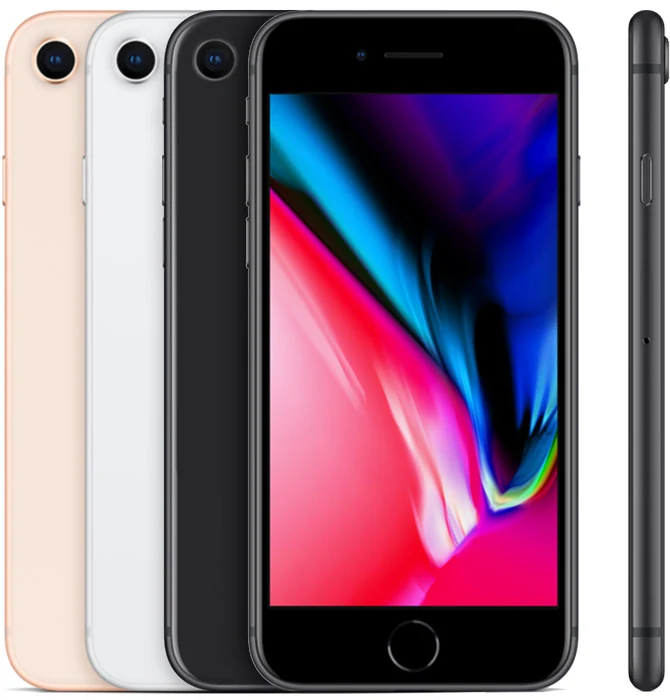
iPhone 8 review summary
- The iPhone 8 keeps the old home-button design but adds wireless charging and a very fast A11 chip.
- The single camera is fine for everyday shots but lacks the zoom and AR features of the Plus and X.
- For the price, it’s a solid phone, but the bezel-less iPhone X shows where phones are headed.
- Apple A11 Bionic chip is very fast
- Qi wireless charging is convenient
- True Tone display looks natural in any light
- IP67 water resistance (can survive a splash)
- Has noisy low-light photos
- Ships with a slower charger in the box
- No headphone jack
- Design feels dated vs. bezel‑less rivals
Editorial verification: MobileBurn editors verified the device specifications, ownership details, and material review findings before publication.
The iPhone 8 Is Familiar, Not Fresh
The iPhone 8 arrived in 2017 as a solid, well-built phone that didn't try to reinvent the wheel. It keeps the familiar Touch ID design and 4.7-inch Retina HD LCD display, now enhanced with True Tone technology for better white balance in different lighting. The metal back is replaced with glass to enable Qi wireless charging, a major new feature. However, reviewers noted that the phone looks almost identical to the iPhone 7 and even the 6s, making it feel more like an incremental update than a leap forward.
The single 12MP camera lacks the optical zoom and augmented reality potential of the Plus and X models. If you're comparing options, check out other phone reviews to see how different designs stack up. The iPhone 8 is excellent at what it does, but it already felt like the past as the all-screen iPhone X showed where smartphones were headed.
Glass Back & Touch ID: Design That Stays the Same — iPhone 8
Physically, the iPhone 8 is almost the same size as its predecessor, but it's slightly heavier at 148 grams due to the glass back. The glass makes it feel classier but may be more fragile than the aluminum iPhone 7. Below the screen, the capacitive home button with Touch ID remains—there is no Face ID here. The phone is IP67 water-resistant, like the iPhone 7, and still lacks a headphone jack. Dual speakers are louder, but not dramatically so.
The 4.7-inch LCD has the same resolution as before but gains True Tone, which adjusts white balance to the ambient light. If you want to see all models and colors, browse the phone directory for more details. The overall design is familiar to anyone who has used an iPhone in recent years, which some may see as comforting and others as dated.
A11 Bionic: The Power Inside the iPhone 8
The A11 Bionic chip is a significant upgrade, with a six-core design that includes two high-performance cores and four efficiency cores. This processor makes the phone feel very fast for everyday tasks and gaming, and it includes a Neural Engine for machine learning. It sets the stage for augmented reality apps, though the single camera is a limitation for AR. Battery life is rated for up to 13 hours of video playback, and the phone supports fast wired charging as well as Qi wireless charging.
The camera is a 12MP sensor with optical stabilization, which takes strong photos in daylight but can show noise in low light. The iPhone 8 ships with a slower charger in the box, which many reviewers noted as a drawback. Overall, the A11 chip is the phone's strongest asset, keeping it competitive for years, even if other aspects are less exciting.
Single Camera: Strong Photos, No Zoom — iPhone 8
The iPhone 8 carries a single 12-megapixel camera with optical image stabilization. In everyday conditions, it captures sharp, well-exposed shots with natural colors—especially in bright light. The True Tone display helps you judge white balance accurately as you frame a picture. Portraits look strong, but you lose the telephoto zoom found on the Plus model, and low-light shots show noticeable noise if the scene isn't well lit. The camera also lacks a second lens for augmented reality apps, which the iPhone X uses to better sense depth.
If you frequently shoot moving subjects at a distance or want crisper zoom, the phone finder shows that many rivals offer dual-camera setups for similar money. For casual everyday snapshots, however, the iPhone 8's camera remains dependable.
Wireless Charging and the Glass Trade-Off — iPhone 8
The shift to a glass back lets the iPhone 8 charge wirelessly using any Qi pad. It's a genuinely convenient addition—drop the phone on a charger at your desk or bedside without plugging in. Fast wired charging is also supported if you buy a higher-power adapter separately; the included charger is slower. The glass body makes the phone feel more premium than the metal-backed iPhone 7, but it also makes it more fragile. A drop on a hard surface is more likely to crack the rear glass than dent aluminum.
Apple rates the phone IP67 for water resistance, so it survives splashes and brief submersion. Wireless charging works through most slim cases, and the glass back comes in Gold, Silver, Space Gray, and a (Product)Red finish. For a hands-on visual difference, check a side-by-side comparison of the 8 and 8 Plus to see how the larger model handles wireless charging.
Is the iPhone 8 right for you?
Apple iPhone 8 Review: A Reliable Phone, but Not the Future
The iPhone 8 delivers a fast A11 Bionic chip, wireless charging, and a capable single camera inside the familiar 4.7-inch home-button design. The phone runs iOS smoothly, handles games and augmented reality tasks with the Neural Engine, and its True Tone display adjusts to ambient light for comfortable viewing. Battery life matches the iPhone 7, with up to 13 hours of video playback.
The biggest downsides are the dated look next to bezel-less phones like the iPhone X, the lack of a headphone jack, and the single camera's limitations for zooming and AR depth sensing. If you already own an iPhone 7 or 6s, the upgrade isn't dramatic—you get wireless charging and a faster chip, but the same design and screen size. For someone coming from an older iPhone or wanting wireless charging without spending $1,000, the iPhone 8 remains a solid, reliable daily driver—just not the future.