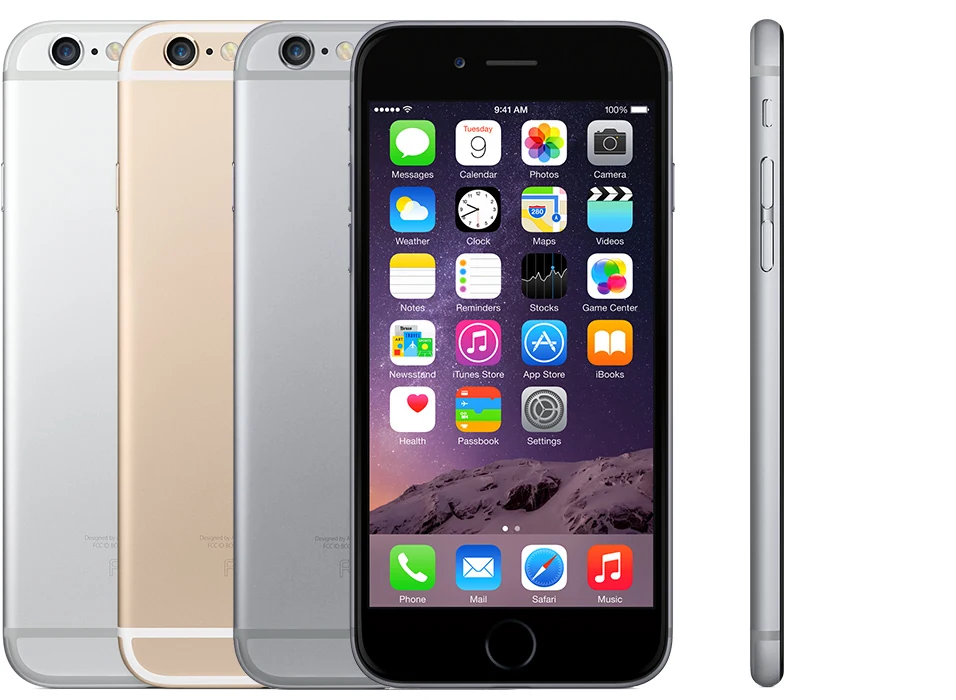
iPhone 6 review summary
- The iPhone 6 delivers a spacious, crisp 4.7-inch screen and improved camera autofocus. It is thin, elegant, and performs well. Battery life is only average. Introduced Apple Pay, a smooth payment system.
- The iPhone 6 display is not Full HD but offers very strong contrast and color. It feels close to the glass. The screen remains useful for its size. Picture is similar to iPhone 6S and 7.
- The iPhone 6 is exceptionally well-built with a thin, metal body. It lacks water resistance and software support is outdated. Low price does not mean modern security.
- At just 129 grams, it remains light and easy to slip into a pocket.
- While it does not reach Full HD or QHD, the screen delivers very strong contrast and color reproduction.
- The improved contrast ratio makes blacks deeper and whites brighter, which is especially noticeable when watching movies or viewing photos.
- One of the standout features introduced with this model is Apple Pay, a smooth and secure payment system that works well at an increasing number of retail locations.
- The rounded design feels natural in the hand, and the 4.7-inch screen allowed Apple to offer a larger display without making the device unwieldy.
- This thin aluminum construction also means that the screen and frame are more vulnerable to damage, and the phone lacks any official water-resistance rating.
- Although it lacks the saturation of some Super AMOLED screens, many users find the color accuracy more natural.
- Battery life is only average, offering up to 11 hours of video playback, which is not a significant improvement over the iPhone 5S.
Editorial verification: MobileBurn editors verified the device specifications, ownership details, and material review findings before publication.
Design of the iPhone 6: Thin, Rounded, and Pocket-Friendly — Apple iPhone 6
The iPhone 6 marked a clear departure from the sharp, industrial edges of its predecessors. Its thin, all-metal body with gently curved glass made it one of the sleekest smartphones of its time. The rounded design feels natural in the hand, and the 4.7-inch screen allowed Apple to offer a larger display without making the device unwieldy. At just 129 grams, it remains light and easy to slip into a pocket.
However, this thin aluminum construction also means that the screen and frame are more vulnerable to damage, and the phone lacks any official water-resistance rating. For a device from 2014, the build quality still impresses, but buyers should be aware that its final software generation is now old, so a low price should not be mistaken for current app or security compatibility. For more on how this design compares to other models, check out our phone reviews.
Display Performance: 4.7-inch Retina HD and What It Means for You — Apple iPhone 6
The 4.7-inch Retina HD LCD display on the iPhone 6 offers a resolution of 1334 x 750 pixels, which keeps the pixel density at 326 PPI. While it does not reach Full HD or QHD, the screen delivers very strong contrast and color reproduction. The improved contrast ratio makes blacks deeper and whites brighter, which is especially noticeable when watching movies or viewing photos. The display also feels very close to the glass, giving the impression that the content is right at your fingertips.
Although it lacks the saturation of some Super AMOLED screens, many users find the color accuracy more natural. Apple used a very similar panel in the iPhone 6S and iPhone 7, so the iPhone 6 screen remains a solid performer for its size. For a complete list of devices with various display technologies, visit our phone directory.
Apple A8 Chip and iOS: Everyday Performance in 2014 — Apple iPhone 6
Under the hood, the iPhone 6 is powered by the Apple A8 chip, which brought improved speed and efficiency over the previous generation. Paired with iOS, the phone feels responsive for everyday tasks like browsing, messaging, and using apps. The operating system remains one of the best in class, with a vast ecosystem of high-quality applications. One of the standout features introduced with this model is Apple Pay, a smooth and secure payment system that works well at an increasing number of retail locations.
The camera also benefits from better autofocus, making it quicker to capture sharp images. However, battery life is only average, offering up to 11 hours of video playback, which is not a significant improvement over the iPhone 5S. The phone also includes an M8 motion co-processor for better activity tracking. While the A8 chip is no longer new, it still handles basic tasks without major lag, though the lack of current software updates means it cannot run the latest apps or security patches.
Camera: 8MP Main Shooter and Autofocus Improvements — Apple iPhone 6
The iPhone 6 is equipped with an 8MP main camera, but the real story lies in the improvements Apple made to the autofocus system. According to hands-on reports, the camera focuses faster and more reliably than its predecessor, making it easier to capture sharp images in daily use. This was a welcome upgrade for a sensor that, on paper, might seem unchanged from earlier iPhones.
The camera software also benefited from the Apple A8 chip, which allowed for smoother image processing and faster burst mode shots. While the iPhone 6 lacks the optical image stabilization found in the larger iPhone 6 Plus, its 8MP shooter was considered more than capable for the era. For those looking to compare it directly with other models, a side-by-side comparison with the 6 Plus reveals the differences in camera hardware and overall features.
Battery Life and Charging: A Trade-Off on Endurance — Apple iPhone 6
Charging is handled by the included 5W wired adapter, which was standard for the time but is slow by modern standards. The phone also lacks any official water-resistance rating, a detail that becomes more important as the device ages. For those considering a used iPhone 6 today, it is worth remembering that its final software generation is now old, and a low price should not be mistaken for current app or security compatibility. To explore other options from the same era, use our phone finder tool.
Is the iPhone 6 right for you? — Apple iPhone 6
Price and Value: Getting to Know the Apple iPhone 6
When the iPhone 6 launched in 2014, it was priced at $199 with a contract, making it an accessible entry into Apple’s ecosystem. After the iPhone 7 debuted in 2016, Apple discontinued the iPhone 6 and 6 Plus, though the 6S models remained available at lower prices. By then, entry-level storage had been bumped to 32GB, and prices were reduced to $549.
Today, the iPhone 6 can be found used or refurbished for very low prices. However, value must be weighed against its limitations: the phone lacks an official IP rating for water resistance, and its software support has ended. While the thin metal design and excellent iOS ecosystem were groundbreaking in 2014, modern buyers should consider whether the trade-offs in battery life, security, and app compatibility are worth it. For most, the iPhone 6 remains a remarkable piece of history but not a practical choice for daily use.