iPhone 4 review summary
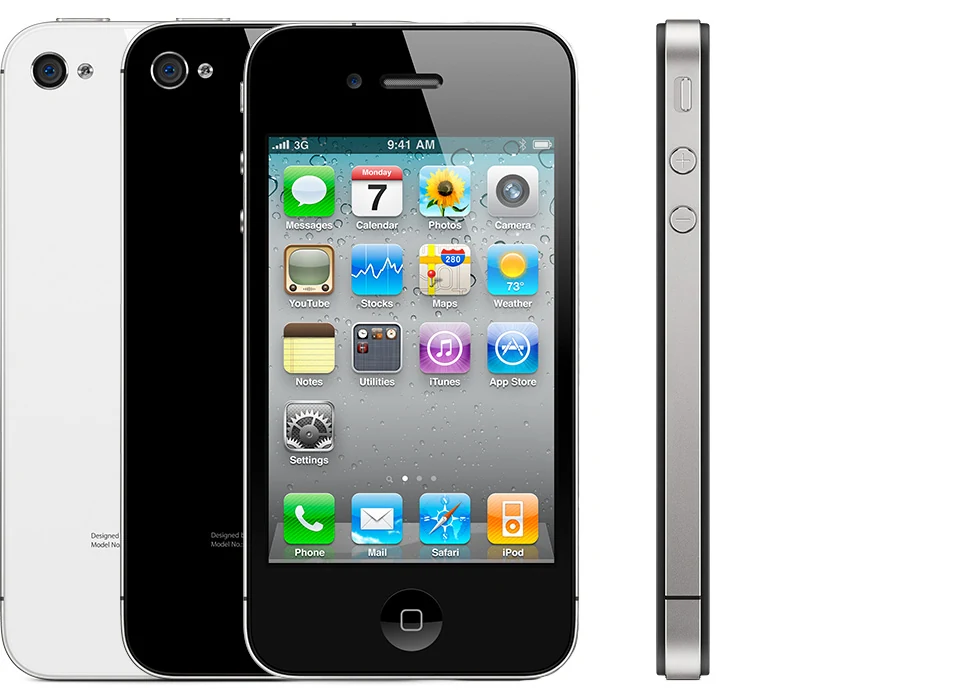
- The iPhone 4 introduced Apple’s Retina display, a front-facing camera for FaceTime, and a flat glass-and-steel design.
- It has a 5-megapixel camera, Apple A4 chip, and up to 32GB storage.
- FaceTime works only over Wi-Fi, and usable storage is slightly less than the 3G S.
- The phone feels solid but has a sharper edge and slippery glass back.
- Overall, it was a major step forward in 2010, but competitors were catching up.
- Sharp, high-resolution Retina display
- Solid glass-and-steel build
- strong 5-megapixel camera with flash
- FaceTime video calling over Wi-Fi
- The glass back is noticeably slippery, and the sharp edge along the upper frame can feel uncomfortable when held to your ear for a long call.
- The phone is actually a smidgen smaller than the iPhone 3G S, but because it isn't tapered, it can feel thicker in the hand.
- The volume buttons and home key require a firmer press than before, which helps prevent accidental presses.
- The truly new feature was the front-facing camera, which enabled FaceTime video calling.
Editorial verification: MobileBurn editors verified the device specifications, ownership details, and material review findings before publication.
The iPhone 4 Design: Glass, Steel, and a Sharper Feel — Apple iPhone 4
The iPhone 4 marked a dramatic shift from the rounded plastic of its predecessors. Apple chose a flat, squared-off body made of glass on the front and back, held together by a stainless-steel band. This gave the phone a much more premium, solid feel. However, the glass back is noticeably slippery, and the sharp edge along the upper frame can feel uncomfortable when held to your ear for a long call.
The phone is actually a smidgen smaller than the iPhone 3G S, but because it isn't tapered, it can feel thicker in the hand. The volume buttons and home key require a firmer press than before, which helps prevent accidental presses. If you are looking at a used model, remember that the GSM and CDMA versions have physical differences, including the SIM tray, and the glass panels are fragile. For more options, check out our full collection of phone reviews.
Retina Display: A Screen That Changed Everything — Apple iPhone 4
The standout feature of the iPhone 4 was its new Retina display. This 3.5-inch screen packs a resolution of 960 by 640 pixels, which was far higher than anything else on the market at the time. Text looks incredibly crisp, images appear rich and detailed, and colors are stunning. It is easy to get lost staring at this screen. This high pixel density made the iPhone 4 a joy to use for reading, browsing the web, and viewing photos. It set a new standard that competitors scrambled to match.
While the screen is still impressive for its age, it is a 60Hz LCD, so it won't look as smooth as modern OLED panels. To see how it compares to other classic devices, browse our phone directory.
Camera and FaceTime: Photos and Video Calls Go HD — Apple iPhone 4
The iPhone 4 upgraded its main camera to a 5-megapixel sensor with an LED flash, and it can record HD video. The camera is exceptional for its time, taking much better photos than the iPhone 3G S. But the truly new feature was the front-facing camera, which enabled FaceTime video calling. This was a major change. You could now hold a video chat with a friend or family member while walking around your home, giving them a virtual tour. It felt like a glimpse of the future.
However, FaceTime had big limitations: it only worked over Wi-Fi, and only between iPhone 4 users at launch. The usable storage on the 32GB model is also slightly less than the 3G S, which could be a problem if you have a large music and photo library. Overall, the iPhone 4 was a bold step forward, but its age shows in slower performance and limited storage.
Performance and Storage: A4 Chip and Less Free Space — Apple iPhone 4
The Apple iPhone 4 runs on the same Apple A4 chip found in the original iPad, which was a big deal in 2010. It made the phone feel snappy for its time, handling iOS and apps smoothly. However, the usable storage is a bit less than what you might expect. For example, the 32GB model shows about 29.1 GB of available space in the settings, which is slightly less than the iPhone 3G S. This difference can matter if you have a large music or photo collection.
Some users found they had to trim down their files to fit everything on the iPhone 4. If you are looking for a phone with more modern performance, you might want to use our phone finder to see newer options. The iPhone 4 also has less memory than the 3G S, and there is no 64GB version, so storage is limited. For a device this old, checking the storage and repair history is more important than the original capacity.
Battery Life and Charging: What to Expect in 2010 — Apple iPhone 4
The iPhone 4 offers up to 10 hours of video playback on a full charge, which was decent for its time. It uses a 5W wired charger, which is slow by today's standards. The battery life is enough for a day of moderate use, but heavy tasks like video chatting or gaming will drain it faster. Keep in mind that FaceTime, the new video calling feature, only works over Wi-Fi, so you will need a strong connection to use it without draining the battery too quickly.
The phone has no official IP rating for water resistance, so you must keep it away from water. If you are comparing this phone to others from the same year, you can use our side-by-side comparison to see how it stacks up against the iPhone 3G S. Overall, the battery and charging are fine for a 2010 phone, but they are not impressive today.
Is the iPhone 4 right for you? — Apple iPhone 4
Is the Apple iPhone 4 Still Worth a Look?
The Apple iPhone 4 was a major step forward in 2010 with its Retina display, FaceTime camera, and glass-and-steel design. It still feels like a solid phone today, but its age shows in slower performance, limited storage, and no water resistance. The sharp screen and strong camera are nice, but competitors like the HTC EVO 4G and Samsung Galaxy S were catching up. If you want a piece of Apple history, it is worth a look, but do not expect it to keep up with modern phones.
The phone has a slippery glass back and a sharper edge that can feel uncomfortable against your ear. FaceTime only works over Wi-Fi, and usable storage is slightly less than the 3G S. Overall, the iPhone 4 was a bold step forward, but it is best for collectors or those who want a simple, old-school iPhone experience.