iPhone 3GS review summary
- If you already owned an iPhone 3G, the 3GS was a tough sell: Wi-Fi could be inconsistent, the O2 network often negated the faster HSDPA, and the camera still lacked zoom. But for anyone coming from an older phone, the 3GS offered the best all-around experience of 2009 with its user interface, app ecosystem, and new media features. Today it’s a piece of memorabilia, not a companion.
- Faster processor and app loading speeds (up to 2x faster claimed)
- 3MP autofocus camera with video recording
- Voice Control for hands-free dialing and music
- Easy video editing and sharing to YouTube
- Today, even a clean example is best treated as memorabilia, as browser and app support have long since fallen behind modern requirements.
- While Voice Control was a useful addition, it wasn't a major change.
- Real-World Speeds: Not All That Glitters Is 7.2Mbps On paper, the faster 7.2Mbps HSDPA support in the iPhone 3GS promised snappier data.
- If you were hoping for a dramatically faster data experience, the reality was more nuanced.
- Limited camera: still only 3MP with no zoom, weak in low light
- No MMS, or no copy/paste on previous model; 3GS adds some but not all
- Wi-Fi performance can be inconsistent
- Not a dramatic change from iPhone 3G; 3G owners should consider if speed alone matters
Editorial verification: MobileBurn editors verified the device specifications, ownership details, and material review findings before publication.
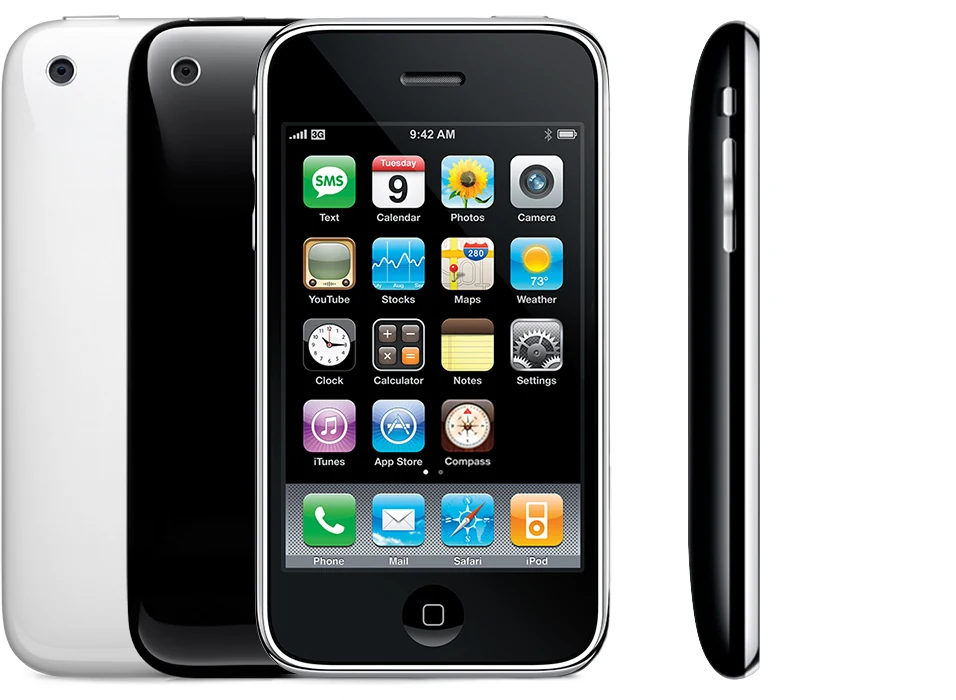
A Familiar Look, But Twice the Engine — Apple iPhone 3GS
From the outside, the iPhone 3GS was almost indistinguishable from its predecessor. It kept the same rounded plastic back and 3.5-inch LCD screen, so only the shiny lettering on the rear gave away that this was the speed-focused model. Inside, however, Apple swapped in a faster Samsung S5PC100 processor that made everyday tasks noticeably snappier. Launching apps, loading web pages, and playing graphics-heavy games all felt quicker—reviewers noted that you didn't need a stopwatch to feel the difference. The speed boost was especially welcome in demanding apps like MLB.com At Bat or Tiger Woods Golf, where the improved performance made the experience far more fluid.
That said, the upgrade wasn't a no-brainer for everyone. If you already owned an iPhone 3G, the faster processor alone might not justify the cost, especially since the O2 data network often made the theoretical 7.2Mbps HSDPA support irrelevant in practice. reviewers also flagged inconsistent Wi-Fi performance as a concern. For someone coming from an older phone, though, the 3GS delivered the best all-around experience of 2009, combining a refined user interface with a growing app ecosystem.
Today, even a clean example is best treated as memorabilia, as browser and app support have long since fallen behind modern requirements. For a broader look at devices from this era, check out our collection of phone reviews.
Autofocus and Video: The Camera Finally Grows Up — Apple iPhone 3GS
One of the biggest criticisms of earlier iPhones was the camera—a mere 2-megapixel shooter with no autofocus and no video recording. The iPhone 3GS addressed both complaints head-on. It introduced a 3-megapixel camera with autofocus, allowing you to tap the screen to choose your focus point. This made close-up shots and portraits far more usable than before. Even better, the camera could now record video, a feature that had been conspicuously absent. After shooting a clip, the phone offered dead-simple editing tools, and you could send your video to YouTube or MobileMe with a single tap.
However, the camera still had clear limitations. There was no zoom at all, which meant you had to physically move closer to your subject. Low-light performance remained weak, and the 3-megapixel resolution was already being matched or beaten by competitors. For many users, the addition of video recording was the headline feature, but it wasn't enough to silence critics who wanted a more versatile camera system. If you're curious about other phones from this period, browse our phone directory to see how they compare.
Voice Control: Talk to Your Phone — Apple iPhone 3GS
Another new hardware-exclusive feature was Voice Control, Apple's hands-free system for making calls and controlling music playback. By holding down the Home button, you could simply say a contact's name and whether you wanted to call their home, work, or mobile number. In testing, it worked reliably—reviewers reported that saying "Call Diane Levy home" correctly dialed the right number on the first try. You could also use Voice Control to play specific songs or artists, though it was less accurate with music than with contacts.
The feature was complemented by improved headphones that included inline controls, making it easier to manage calls and music without looking at the screen. While Voice Control was a useful addition, it wasn't a major change. It worked best in quiet environments and could struggle with unusual names or music titles. Still, it marked Apple's first serious step into voice interaction, laying groundwork for future developments. For anyone who frequently made calls while driving or multitasking, it was a welcome convenience that made the 3GS feel more polished than its predecessor.
Real-World Speeds: Not All That Glitters Is 7.2Mbps — Apple iPhone 3GS
On paper, the faster 7.2Mbps HSDPA support in the iPhone 3GS promised snappier data. In practice, however, the O2 network often failed to deliver that theoretical speed, leaving many users stuck at the same pace as the older 3G model. This wasn’t just a minor disappointment; it meant that a key selling point of the upgrade could feel invisible in daily use. The inconsistency extended to Wi-Fi, which occasionally proved frustratingly unreliable. The processor boost was real enough to notice—launching apps, loading graphics, and rendering web pages felt genuinely zippier.
Even so, the network limitations meant that the full potential of this hardware upgrade was frequently left on the table. If you were hoping for a dramatically faster data experience, the reality was more nuanced.
The Same Curve, Now a Collectible — Apple iPhone 3GS
Visually, the iPhone 3GS was nearly identical to its predecessor, the iPhone 3G, sharing the same rounded plastic back and glossy front. The only easy way to tell them apart was the shiny silver lettering on the rear, which quietly marked the S for speed. Inside, the new Samsung S5PC100 chip delivered the advertised performance bump, but the design itself remained familiar. Today, that familiar curve tells a different story. Even a pristine example is best regarded as memorabilia.
Its outdated browser and a lack of modern app support place it far outside the requirements of a daily driver. While it introduced features like autofocus and video recording, its role has shifted from a new tool to a nostalgic artifact. You can still explore its differences from the 3G using a side-by-side comparison.
Is the iPhone 3GS right for you? — Apple iPhone 3GS
Apple iPhone 3GS Review: The Speed-Focused iPhone That's Now a Relic
The iPhone 3GS kept the same rounded body as the 3G but added a faster processor, autofocus camera, video recording, and Voice Control. It was the speed-focused upgrade of 2009, running iPhone OS 3.0. Today it’s not suitable as a daily driver because browser and app support are far outside modern requirements. For a full list of current devices, use our phone finder.