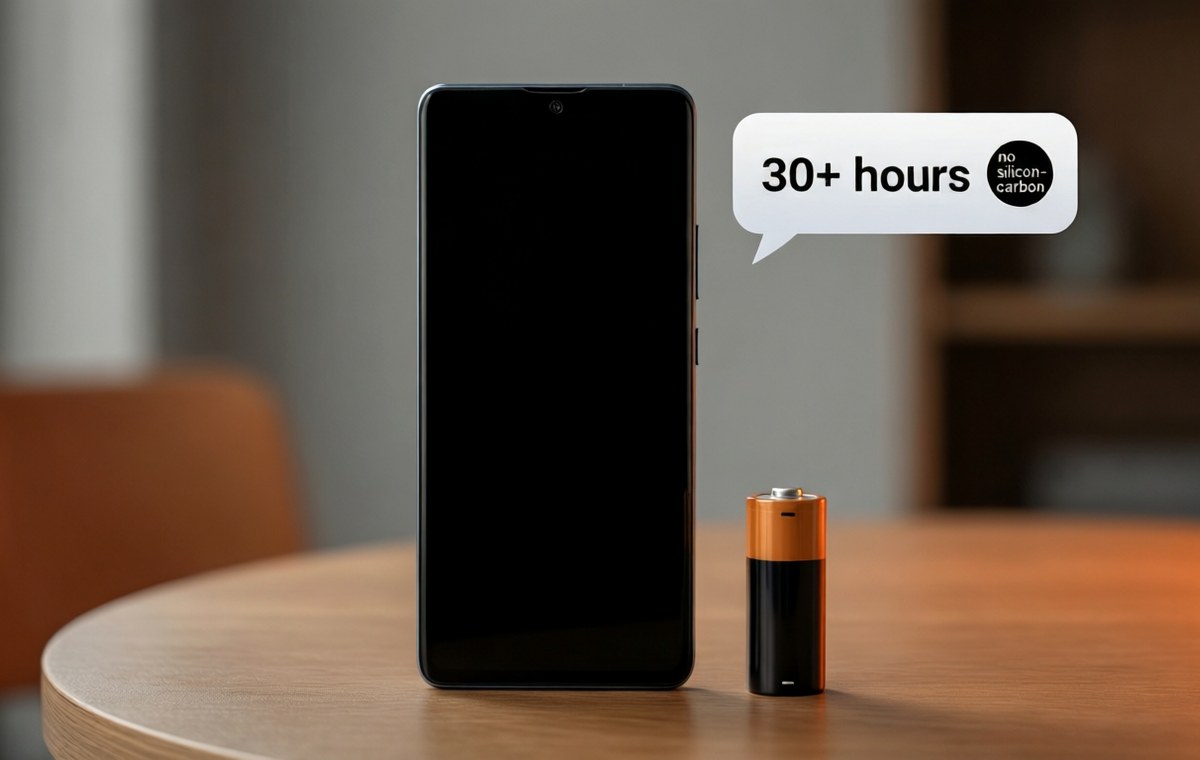
Summary of Pixel 11 battery choice: Google sticks with lithium-ion while rivals move on
- The Pixel 11 series uses conventional lithium-ion batteries, not the newer silicon-carbon cells found in some rival phones.
- Google says the phones deliver 30-plus hours of battery life and use 100% recycled lithium in the battery.
- Silicon-carbon batteries offer higher energy density but can be more prone to expansion; the best ones now outlast the Pixel 11 in charge cycles.
- The Gemini app hit 1 billion monthly active users, reinforcing Google’s focus on AI as a key differentiator for the Pixel 11.
- Buyers should weigh battery life and long-term health against AI features and ecosystem integration when choosing a phone.
Pixel 11 series skips silicon-carbon batteries
Google just unveiled the Pixel 11 series, and one of the biggest talking points has nothing to do with the camera or the screen. It is about what is inside the phone — or rather, what is not. The Pixel 11, Pixel 11 Pro, Pixel 11 Pro XL, and Pixel 11 Pro Fold all use conventional lithium-ion batteries. They do not use the newer silicon-carbon battery technology that has started appearing in rival phones.
Google confirmed this to Android Authority, stating that the Pixel 11 phones contain 100% recycled lithium in the battery cell and that they do not use silicon-carbon batteries. The company says the phones are “built to deliver exceptional reliability” and offer more than 30 hours of battery life. Google added that it “continuously explores and qualifies emerging technologies” to improve the user experience.
That last phrase — “emerging technologies” — is important. It is the same language Samsung used earlier this year when explaining why the Galaxy S25 Edge did not have a silicon-carbon battery. But silicon-carbon batteries have been inside phones since at least 2024, so calling them emerging in 2026 raises eyebrows.
What silicon-carbon batteries offer — and their drawbacks
What this means for Pixel 11 battery choice
Silicon-carbon batteries offer a clear advantage over traditional lithium-ion cells: higher energy density. That means a phone maker can either pack more capacity into the same physical space or keep the same capacity in a smaller battery. Samsung’s Galaxy Z Fold 8 Ultra, for example, is slightly thinner than the Galaxy Z Fold 7 but holds a 5,000mAh silicon-carbon battery compared to the older model’s 4,400mAh lithium-ion battery.
For Pixel 11 buyers, the practical trade-off is straightforward. The Pixel 11 series will not get a capacity boost from a battery chemistry change this year. Google promises 30-plus hours of battery life, which is solid, but rivals using silicon-carbon cells may offer longer runtimes from the same size battery or thinner phones with the same runtime.
That said, silicon-carbon batteries are not perfect. They are more prone to physical expansion over time, and early versions did not hold up as well as lithium-ion cells after many charge cycles. Manufacturers have addressed this by using only a small amount of silicon in the battery and by building internal structures that limit expansion. Still, the long-term health of silicon-carbon batteries has improved steadily.
Battery health: How Pixel 11 compares to rivals
Google’s decision to stick with lithium-ion is not just about caution with new chemistry. The company has had battery reliability problems in the past. Some older Pixel A-series phones suffered from major battery defects, so Google may be extra careful about introducing a new battery type that has its own expansion and longevity concerns.
Here is how the Pixel 11’s battery longevity compares to some rivals that use silicon-carbon cells:
- Google Pixel 11: 1,000 charge cycles before the battery reaches 80% of its original capacity.
- Samsung Galaxy Z Fold 8 Ultra(silicon-carbon): 1,200 cycles before 80% capacity.
- Xiaomi 17(silicon-carbon): 1,600 cycles before 80% capacity.
So while Google is skipping silicon-carbon, the best silicon-carbon batteries now offer better long-term health than the Pixel 11’s lithium-ion cell. That is a surprising twist. Google’s promise of 30-plus hours of battery life per charge is competitive, but the phone may lose usable capacity faster than some rivals over two or three years of daily use.
Gemini hits 1 billion users as Pixel 11 launches
On the same day Google announced the Pixel 11 series, the company also shared a major milestone for its Gemini AI assistant. The Gemini app now has over 1 billion monthly active users, making it Google’s fastest-growing product ever. CEO Sundar Pichai announced the figure, noting that Gemini is the 14th Google product to reach that milestone, joining Search, Gmail, Android, Maps, Chrome, Play, and YouTube.
Gemini’s growth has been rapid. In May 2025, the app had 400 million monthly active users. That climbed to 900 million a year later, and then to 1 billion by early August 2026. More than 100 million of those users are on iOS, and power users on the macOS app prompt Gemini about twice as often as users on other platforms.
Google also shared how people are using Gemini. About 63% of users talk directly to the assistant, and there are now more “voice only” users than before. With Gemini Live, one in five interactions goes beyond voice to use live camera and screen sharing. The app generates over 150 million images per day and is adding more study features in the coming weeks.
For Pixel 11 owners, tight integration with Gemini is a key selling point. The Pixel 11 phones are designed to work closely with Google’s AI, from on-device tasks to cloud-powered features. The battery decision may frustrate some tech enthusiasts, but the AI experience is a clear area where Google is pushing ahead.
What this means for your next phone purchase: Pixel 11 Google
If you are shopping for a new phone right now, the battery chemistry choice is one factor among many. Here is how to think about it:
- Battery life matters more than battery type. Google says the Pixel 11 offers 30-plus hours of battery life. If that meets your needs, the lack of silicon-carbon may not matter in daily use.
- Long-term health varies by brand. The Pixel 11’s 1,000-cycle rating is lower than some silicon-carbon rivals, but it is still a solid number. Most people upgrade every two to three years anyway.
- Silicon-carbon enables thinner phones. If you want the thinnest possible device, phones with silicon-carbon batteries have an edge. The Pixel 11 Pro Fold is already a foldable, so thickness may be less of a concern.
- Google is betting on AI, not battery chemistry. The Pixel 11 series is built around Gemini and Google’s ecosystem. If you value AI features and tight integration with Google services, the Pixel 11 is a strong choice regardless of what is inside the battery.
For a deeper look at how Pixel 11 compares to other phones, check out our phone finder tool and comparison page. You can also read our full phone reviews for hands-on impressions of the latest models.