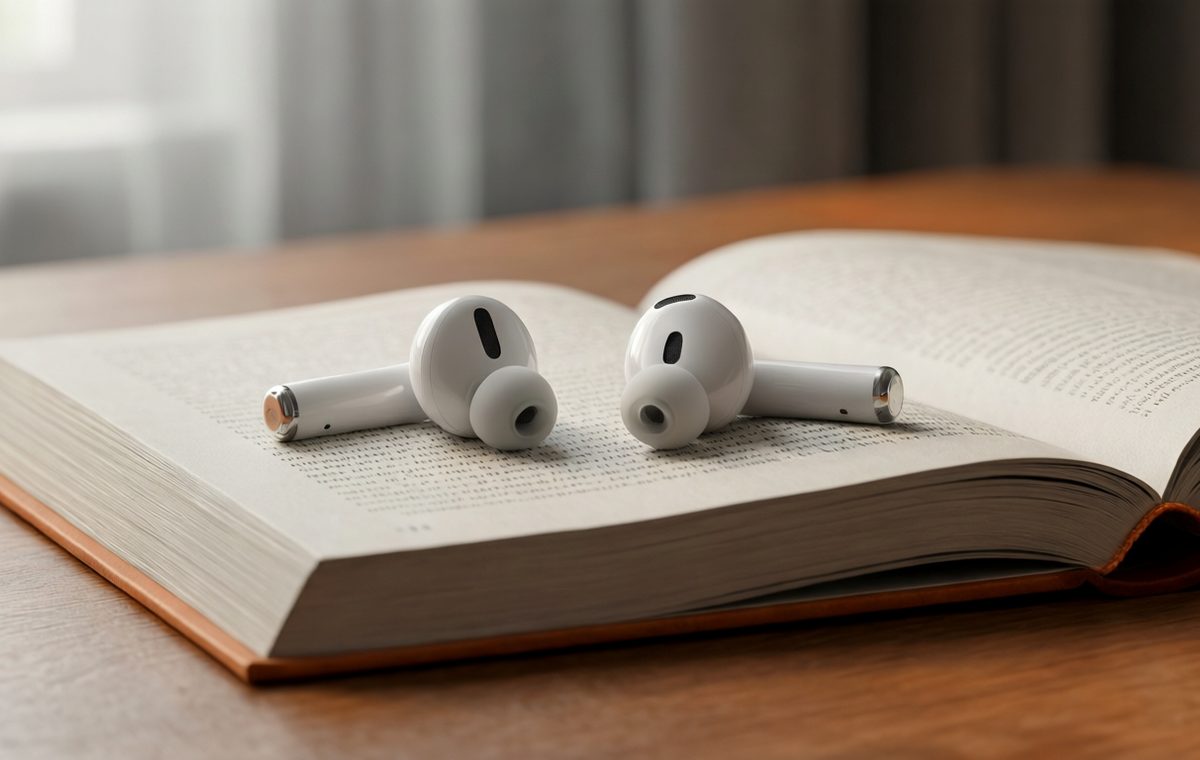
Summary of Apple's camera-equipped AirPods are real: Here is what we know
- Apple accidentally showed AirPods with built-in cameras inside a macOS test video.
- The cameras cannot take photos or video; they only feed surroundings to Apple Intelligence for answering questions via Siri.
- A launch could happen as early as next month at Apple's iPhone event.
- The feature requires Apple Intelligence, so Android users will not get the AI benefits.
- Privacy concerns exist because the earbuds wear a camera, even if it doesn't record.
What the leaked video shows
Apple might be about to change how we think about wireless earbuds. A video hidden inside the latest test version of macOS shows a person wearing a pair of AirPods while holding a book. The voiceover says, “With Visual Intelligence, your world becomes savable. See something you like? Just ask me to save it for later.” That clip, spotted by a MacRumors analyst inside macOS 26.7 RC, appears to be the first real look at AirPods with built-in cameras.
Before you get excited about tiny selfie cameras in your ears, you should know these cameras aren't for photos or video. Their only job is to look at your surroundings and hand that information over to Apple's AI, known as Apple Intelligence. Think of it a lot like Google's Gemini Live — you ask a question about what you're looking at, and the earbuds help answer it using what the camera sees.
Cameras for AI, not for photos
What this means for Apple's camera-equipped AirPods are real
According to details found in the macOS update, the cameras are strictly for a feature Apple calls Visual Intelligence. You cannot press a button and take a snapshot. You cannot record video. Instead, you can ask Siri something like “What plant is this?” while facing a flower, or “Who wrote this book?” while holding the cover in front of you. The camera feeds the image to Apple Intelligence, and Siri speaks the answer into your ear.
An additional note discovered in the software warns: “To get the most accurate information about things in your environment, make sure AirPods are not covered.” That means your hair or a hat could block the camera's view, so you will have to keep the earbuds visible for the feature to work right.
This is a smart privacy move. By not allowing the earbuds to save or send pictures, Apple avoids the awkwardness of having a camera pointed at people without their knowledge. The system only processes what it needs to answer your question, then discards the visual data.
What the new design looks like and when it might arrive
The AirPods shown in the video look very close to current models, but there is one difference. The stem appears slightly thicker than what you see on the AirPods Pro today. That extra thickness likely hides the tiny camera lens, along with the extra processing hardware needed to talk to Apple Intelligence.
Apple is expected to announce this new model — known inside the company by the codename B790 — as early as next month during the company's annual iPhone launch event. The same event is also rumored to introduce Apple's first foldable device, the iPhone Ultra, which is said to share a similar display size and shape as the Galaxy Z Fold 8.
If you are in the market for a new phone or earbuds, the timing matters. Waiting until September could let you grab the camera-equipped AirPods right out of the gate. If you need something today, you can always check our phone directory or use our phone finder to see what's already available.
What this means for Samsung and everyone else
What does this mean for the rest of the earbud market? History shows that when Apple includes a feature in a popular product, other companies usually follow. Samsung has already experimented with cameras in earbuds in the past, and a move like this could push them to release Galaxy Buds with built-in cameras within a year or two. Other major brands will likely look at the same idea.
For now, though, the camera AirPods are an Apple-exclusive product. And they are squarely aimed at people who already use Apple's ecosystem. Visual Intelligence requires Apple Intelligence, which runs on recent iPhones, iPads, and Macs. If you own an Android phone, these earbuds will not give you the AI features. You will still be able to use them as regular Bluetooth earbuds for music and calls, but the magic only works with Apple gear.
If you are interested in how other camera-equipped devices work, check out our mobile security guides for tips on protecting your privacy, or browse our connectivity guides for help with Bluetooth issues.
Privacy worries and real-world limits
Not everyone is thrilled about the idea. Some tech fans worry that sticking cameras on earbuds invites a new level of privacy risk. Even if Apple says the cameras cannot record, the fact that a lens is pointing out from your ear can make people around you uncomfortable. Apple will have to work hard to convince the public that these cameras are harmless.
Then there is the practical side. You have to hold or face whatever you want to ask about. You cannot just look around a room and get answers about everything — you need to point your head at the object and keep the earbuds uncovered. That limits the use cases. Reading a menu at a restaurant, identifying a landmark while walking, or checking the label on a product at the store all make sense. Asking about the whole room at once does not.
Battery life is another unknown. Adding a camera and real-time AI processing will drain the battery faster than regular AirPods. You should expect shorter listening time than the current AirPods Pro, though Apple may compensate with a larger case battery. We will have to wait for the official launch to know the final numbers.
Will you actually use them?: Apple AirPods Here
Camera-equipped AirPods are not a gimmick, but they are not a revolution either. They are a new way to ask questions without pulling out your phone. For someone who cooks and needs to identify an ingredient, or a student studying a textbook, or a traveler trying to read a sign in another language, this feature could be genuinely useful. You just speak, and the earbuds handle the rest.
But the usefulness depends heavily on where you live and what phone you own. Visual Intelligence needs Apple Intelligence, which is not available in every country yet. If your region does not support Apple Intelligence, these earbuds will lose their main selling point. Always check compatibility before ordering.
For the latest on this and other Apple news, keep an eye on our mobile news section. And if you want to see how today's best devices compare, take a look at our best phones list or use the phone comparison tool to weigh your options. You can also read our review methodology to understand how we evaluate products.