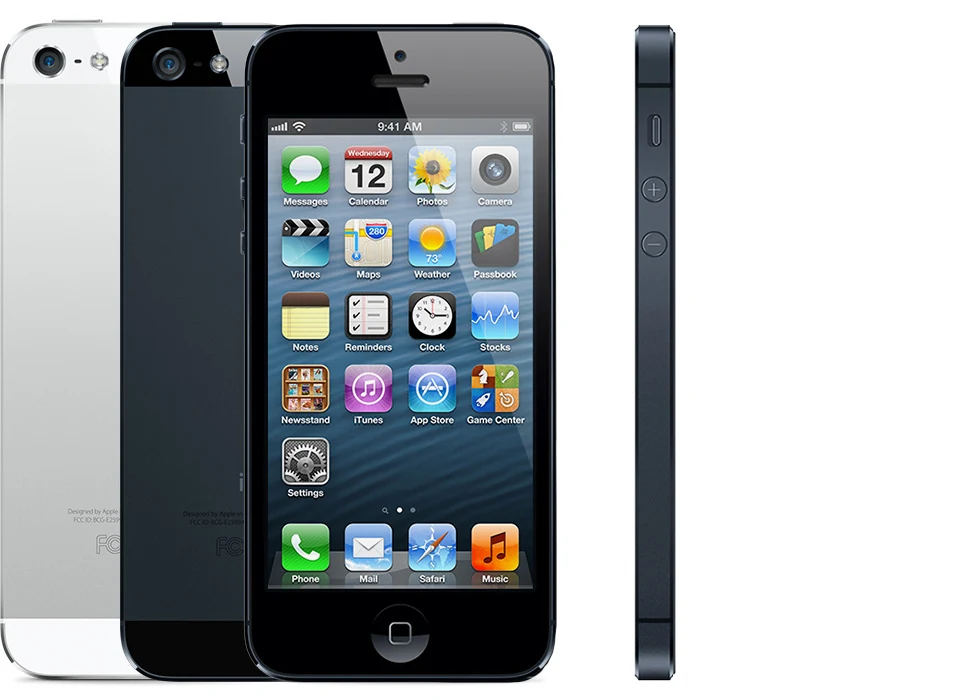
iPhone 5 review summary
- The iPhone 5 was a big step forward in 2012 with a taller screen, lighter body, and new features like Lightning and LTE.
- Reviewers loved the light weight and solid feel, though some found it a bit hollow at first.
- The phone is now very old. It is no longer sold new, the battery may need replacing, and early LTE may not work on today's networks.
- If you find a cheap used one, it can still work for basic tasks, but don't expect it to keep up with modern phones.
- Very light and thin design (112g) makes it easy to carry.
- Taller 4-inch screen gives more room without making the phone too big.
- Faster A6 chip and improved battery life over the iPhone 4S.
- Introduced Lightning connector and LTE, which became standard later.
- Some said it felt a bit hollow compared to the heavier, more solid feel of older iPhones.
- After using it for a while, people got used to the weight and liked how easily it slipped into a pocket.
- The phone has sharp corners and a flat back, similar to the iPhone 4, but is thinner and sleeker overall.
- It also meant that older accessories and cables no longer worked without an adapter.
Editorial verification: MobileBurn editors verified the device specifications, ownership details, and material review findings before publication.
How It Looks and Feels — Apple iPhone 5
The Apple iPhone 5 is delightfully light at only 112 grams, which was a big change when it came out. Reviewers noted that picking it up for the first time felt a little strange because it was so much lighter than the iPhone 4S. Some said it felt a bit hollow compared to the heavier, more solid feel of older iPhones. However, after using it for a while, people got used to the weight and liked how easily it slipped into a pocket.
The phone is made from aluminum and glass, so it still feels strong and well-built. One thing to watch for is that the black version can show wear on the edges over time. The phone has sharp corners and a flat back, similar to the iPhone 4, but is thinner and sleeker overall. If you want to see how it compares to other phones from the same era, check out our collection of phone reviews for more insights.
A Taller Screen That Still Fits Your Hand — Apple iPhone 5
What this means for Apple iPhone 5
Its 4.0-inch Retina LCD, 60Hz display works with the Apple A6 and Not officially stated by Apple of memory. Storage choices are 16GB–64GB, so buyers should leave enough room for apps, photos, and system updates.
New Connector and Faster Wireless — Apple iPhone 5
One of the biggest changes with the iPhone 5 was that Apple replaced the old, wide 30-pin connector with the new Lightning port. This made the phone thinner and allowed for faster charging. It also meant that older accessories and cables no longer worked without an adapter. Reviewers noted that this was a big update that affected how people used the phone. The iPhone 5 also added LTE support, which gave much faster data speeds over cellular networks.
This was a big step forward from the iPhone 4S, which only had 3G. However, you should know that the early LTE used by the iPhone 5 may not work well on modern networks. If you buy one today, you should check if it will work with your carrier. The phone also kept the 8MP main camera from the iPhone 4S, but improved the software to take better pictures in low light.
The whole experience was powered by the Apple A6 chip, which made the phone feel snappy and quick for 2012. For a full list of old and new devices, you can browse our phone directory.
Performance and Battery Life — Apple iPhone 5
Inside the iPhone 5, Apple used the new A6 chip. Published reviews from 2012 mention that the phone felt fast and snappy for its time. The A6 chip was a real step up from the iPhone 4S and made apps open quickly. The official specs say the phone could play up to 10 hours of video on a full charge. This was a strong improvement over older iPhones.
Reviewers noted that the battery life was solid for a phone of that era, but they also pointed out that the battery was small compared to many Android phones available at the same time. The iPhone 5 also came with LTE support for faster mobile data, though early LTE networks were not as widespread as they are today. The phone used a 5W wired charger, which was standard then but is very slow by modern standards.
For a phone from 2012, the iPhone 5 performed well and lasted through a day of normal use. However, the battery is now likely to need service because it is so old.
What to Watch Out for Today — Apple iPhone 5
The phone launched with iOS, and its support record is check current ios compatibility. Check the software version, app compatibility, security status, and regional network support before buying.
Is the iPhone 5 right for you? — Apple iPhone 5
The iPhone 5 marked a big change for Apple in 2012. It stretched the screen to 4 inches, making it taller without making the phone too wide. It also swapped the old 30-pin connector for the Lightning port and added LTE for faster data. The body was made from aluminum, which made it very light at just 112 grams. Reviewers at the time noted that the phone felt solid but surprisingly light, almost hollow at first. They praised the design for being easy to carry and pleasant to hold.
The taller screen gave more room for reading and typing without making the phone feel huge. For its time, the iPhone 5 was a great improvement over the iPhone 4S. You can see how the two compare in our side-by-side comparison. However, the phone is now over a decade old. The small battery, outdated software, and early LTE make it a poor choice for regular use. The camera, once a highlight, now looks very basic compared to modern phones.
The iPhone 5 was a classic that showed Apple's ability to refine and improve its design. But today, it is a relic. It can still be fun for nostalgia or as a very simple device, but do not expect it to keep up with modern smartphones. Its best use now is as a collector's item or for very light, offline tasks.